+40 749 680 770Monday - Sunday: 10:00 - 18:00

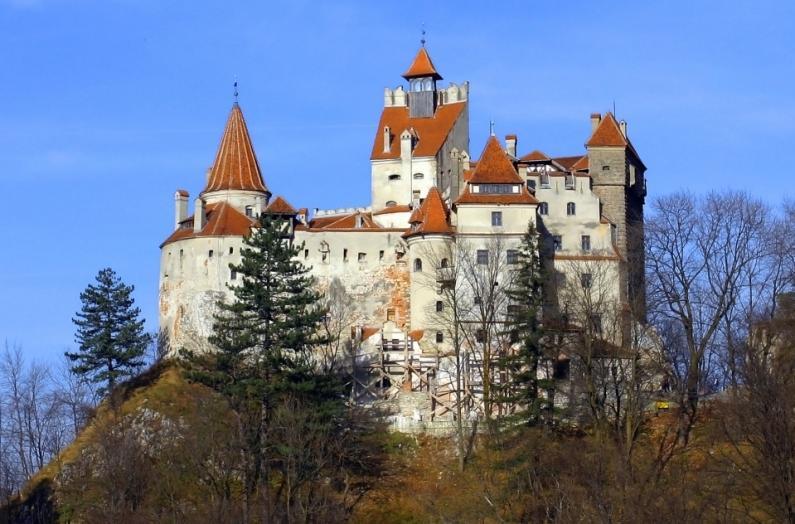
Bran Castle, whose construction began in 1211, is currently located 30 km from the city of Brașov, in the Bran – Rucăr Pass. Tourists flock here in large numbers, especially for the famous legend of Dracula, with Bran Castle being considered his home. The legend came to life in the 19th century, following the publication of the novel *Dracula, written by the Irish author Bram Stoker*.
Due to this legend, the highest number of tourists visiting the castle in Romania is recorded during the Halloween holiday – a celebration of spirits and beings from the other world. At Dracula's Castle, themed masquerade balls with terrifying themes and decorations seemingly pulled from the darkest corners of the afterlife are periodically organized.
Over time, Count Dracula has been associated with the Romanian ruler Vlad the Impaler, known for the cruelty with which he treated wrongdoers; they were impaled and then hung on the walls of fortresses to attract attention and instill fear in the hearts of the population of those times.
Currently, Bran Castle houses the Bran Museum, which spans all four floors of the castle, showcasing collections of:
The museum was reopened on the first day of June in 2009. Within Bran Castle, you can also visit a small village museum, where you can admire traditional houses, farms, and dwellings, as well as economic constructions specific to this area.
Reading here about Bran Castle, I learned that in May 2006, the castle came into the possession of Archduke Dominic of Habsburg and his sisters, Maria Magdalena Holzhausen and Elisabeth Sandhofer, who are the rightful heirs of the castle.
The Bran Museum's heritage holds over 6,000 pieces of history, decorative art, plastic art, folk art, and ethnography. These collections belonged either to the royal fund or were acquired or even donated. The pieces of furniture displayed in the museum belonged to the royal collection of Queen Maria, many of which decorated homes during the interwar period.
Among these pieces of furniture, the oldest is represented by a Gothic-style table built in the 14th century, which belonged to a monastery. The Italian Baroque canopy bed impresses with its shape, a piece constructed in the 18th century.
The Bran Museum is divided into three main sections:
 Tourist areas
The Residences of the Hungarian Nobility in Transylvania - An Exceptional Destination in Attractive Romania Transylvania, a historical region of Romania, i...
 Tourist areas
Polovragi Resort: A Model of Sustainable and Ecological Tourism in the Heart of Transylvania In the heart of Transylvania, at the intersection of mountains...
 Tourist areas
Romania - Spectacular Accommodations Romania, our country, is known for its natural and historical beauties, offering a wide range of accommodation options...