+40 749 680 770Monday - Sunday: 10:00 - 18:00

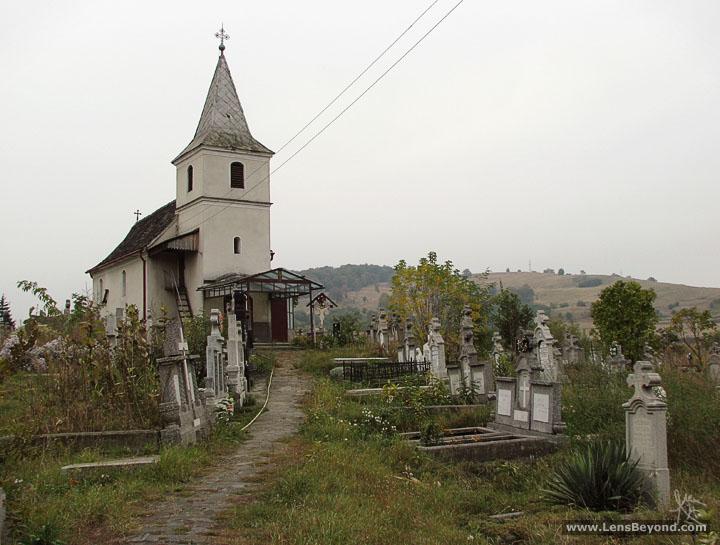
Located in Sibiu County, the town of Copșa Mică has been officially documented since 1402. The landmarks are quite simple – both Hungarians and Saxons, as well as Romanians, have lived in these lands. However, over time, factories were established that became increasingly prolific, covering a large part of the Earth with the pollution of black smoke that poured out daily from the place where thousands of people worked day and night.
Today, Copșa Mică has fewer than 5,404 inhabitants, a number that includes locals from the nearby town of Proștea Mică. The geospatial location places the village:
This distance is a mere trifle for a locality with such a history.
From an etymological and historical perspective, the town of Copșa Mică was documented thanks to Sigismund of Luxembourg, the ruler who managed to free the village from the jurisdiction of the Szekler committee. Thus, 13 years later, the parish and the Roman Catholic church appeared, two institutions that would continue to write history over the years.
Religion being an extremely important central element, by the 7th century, the majority of Transylvanians became Lutherans.
Today, Copșa Mică has:
It is very likely that most people left the town precisely because of the pollution, which caused the town to gain a reputation as one of the most polluted cities in Europe, even before the Chernobyl nuclear accident occurred. The two factories located nearby, Carbosin and Sometra, embody one of the most predominant reasons why many people preferred to seek healthier and less harmful places.
Even though the town of Copșa Mică has been recognized primarily due to negative events, particularly the phenomenon of pollution, the locality can now be visited without any issues. Here, you must not, under any circumstances, miss the Monument to the Romanian Heroes of World War II.
Standing at a height of 1.8 meters, along its length, the names of the town's heroes who gave their lives for peace (of course, only those from World War II) are inscribed. The monument has existed since 1952 and is located on the famous Chestnut Alley.
 Tourist areas
The Transylvania Amphitheater: A Dream Refuge in the Heart of the Carpathians In the village of Moieciu de Sus, Brașov County, there is a magical place whe...
 Tourist areas
Sighisoara Citadel: A Treasure of History and Beauty in the Heart of Transylvania Sighisoara Citadel, located in Mures County, in the heart of historical T...
 Tourist areas
Haferland - The Land of Oats, a Dream Region in the Heart of Transylvania In the heart of Transylvania, between Brașov and Mureș, lies one of the most pict...