+40 749 680 770Monday - Sunday: 10:00 - 18:00
RomânăDeutschEnglish
Turist in Transilvania
HomeAccommodationToursDiscover Transylvania
Turist in Transilvania
HomeAccommodationToursDiscover Transylvania
+40 749 680 770
Turist in Transilvania

Discover the beauty of Transylvania - from medieval fortresses to spectacular mountain landscapes.

+40 749 680 770
contact@turistintransilvania.com

Menu

  • Home
  • Discover
  • Accommodations
  • Tours

About Us

  • About Us
  • FAQ
  • Terms and Conditions
  • Privacy Policy
  • Cookie Policy

Accommodation

  • Medieval Apartments Frauendorf
  • Burg Apartments Meschen
  • Unesco Apartments Wurmloch

© 2026 Turist în Transilvania. All rights reserved.

RomânăDeutschEnglish
The history of a capital that became a village: Cârțișoara, the former capital of Făgăraș Land.
Tourist areasHistoryTraditionBrașovSibiuHartibaciu Valley

The history of a capital that became a village: Cârțișoara, the former capital of Făgăraș Land.

Tudor-Dan Ravoiu
•January 18, 2013

The Historical Significance of Făgăraș Land

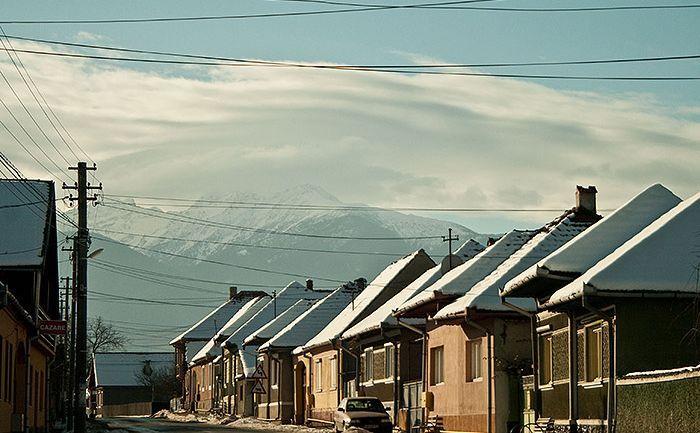
Few know that the Făgăraș Land, a region of major importance in the history of Transylvania, did not have its administrative center in Făgăraș from the very beginning. History shows that the capital of this region was actually in Cârța Românească, the present-day locality of Cârțișoara.

Cârțișoara: The Early Administrative Center

Situated at the foot of the Făgăraș Mountains on the right bank of the stream of the same name, Cârțișoara is first documented in 1223, in a document from the former Hungarian King Andrew II, which refers to events that took place in the years 1205-1206.

During this period, it seems that Cârțișoara was indeed the administrative center of Făgăraș Land. In other words, the importance of the locality at that time was as significant as that of Brașov and Sfântu Gheorghe.

Decline of Importance

However, soon the importance of this locality declined after the decision was made to move the administrative and religious center to Făgăraș.

  • In just 100 years, Cârțișoara became an ordinary village.
  • Its importance in the administrative landscape was almost null.
  • Moreover, in the 16th century, it was even split and divided between two families of Hungarian nobles.

The village only regained its unity in 1964.
Share this article

Articles

Related Articles

The Evangelical Church of Sighișoara: A Gothic-Historic Monument in the Heart of Transylvania
Tourist areas

The Evangelical Church of Sighișoara: A Gothic-Historic Monument in the Heart of Transylvania

The Evangelical Church of Sighișoara: A Gothic-Historic Monument in the Heart of Transylvania Situated in the heart of Transylvania, Sighișoara (Schäßburg)...

March 1, 2026readMore
The Tailors' Tower in Cluj-Napoca: A Symbol of Resilience and Creativity
Tourist areas

The Tailors' Tower in Cluj-Napoca: A Symbol of Resilience and Creativity

The Tailors' Tower in Cluj-Napoca: A Symbol of Resilience and Creativity In the heart of Transylvania, in the city of Cluj-Napoca, lies a historic monument...

February 26, 2026readMore
Máriaffy Castle in Sângeorgiu de Mureș: An Architectural Jewel of Transylvanian Nobility
Tourist areas

Máriaffy Castle in Sângeorgiu de Mureș: An Architectural Jewel of Transylvanian Nobility

Máriaffy Castle in Sângeorgiu de Mureș: An Architectural Jewel of Transylvanian Nobility In the heart of Transylvania, in the locality of Sângeorgiu de Mur...

February 22, 2026readMore
All articles