+40 749 680 770Monday - Sunday: 10:00 - 18:00

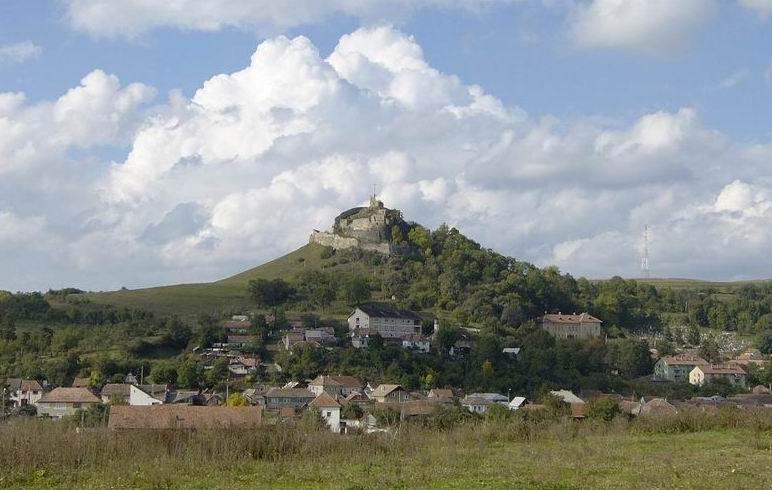
Sweet as salt in dishes – this is what a stranger might say at first glance about the town of Rupea. Part of Brașov County, the locality boasts a massive salt deposit underground, which has led to a tradition of salt mining, a practice and source of income for the vast majority of the area's residents even today. However, it is not just for export – but for all types. Locals are known as avid salt consumers, especially in their households.
Looking back a bit, since December 1989, a wave of Saxons from Rupea fled to Germany. Indeed, the history of Rupea is quite tumultuous, given that many people and colonies have crossed its threshold. Among them, we can easily mention the Dacians, under whom the town was known as *Rumidava, until the Romans arrived – immediately changing its name to Rupes* (rock).
One of the most imposing tourist attractions enticing visitors to Rupea is the Rupea Fortress – it is located at the top of Cohalm Hill, strategically positioned to see any point in the region without much trouble. A series of predators were thus spotted and eliminated on the spot. The construction of the fortress was completed in the 17th century, and since then it has served as a refuge for all people in the surrounding localities.
From a technical and logistical standpoint, this fortress is extremely well thought out architecturally. It features:
Additionally, the town of Rupea is home to the Evangelical-Lutheran Church, which dates back to the 14th century, marking the first moment when the first brick was laid. Its fortification took no less than two centuries – today, any tourist can enjoy the sight of murals created under lime and an interior balance worthy of being embraced and revisited endlessly.
If you want to experience a perfect history lesson, the town of Rupea is the perfect choice. The Transylvanian accumulation also includes this locality, well-known for its difficult periods, predators, and countless attempts to conquer the strategically built fortress. This is not only an opportunity for tranquility but also a way to understand beyond the words written by historians – to traverse those areas, rich in history, tradition, and timeless aspects that create a dreamlike landscape. Once you arrive here, you will feel that the decision was indeed a good one!
 Tourist areas
The Residences of the Hungarian Nobility in Transylvania - An Exceptional Destination in Attractive Romania Transylvania, a historical region of Romania, i...
 Tourist areas
Polovragi Resort: A Model of Sustainable and Ecological Tourism in the Heart of Transylvania In the heart of Transylvania, at the intersection of mountains...
 Tourist areas
Romania - Spectacular Accommodations Romania, our country, is known for its natural and historical beauties, offering a wide range of accommodation options...