+40 749 680 770Monday - Sunday: 10:00 - 18:00

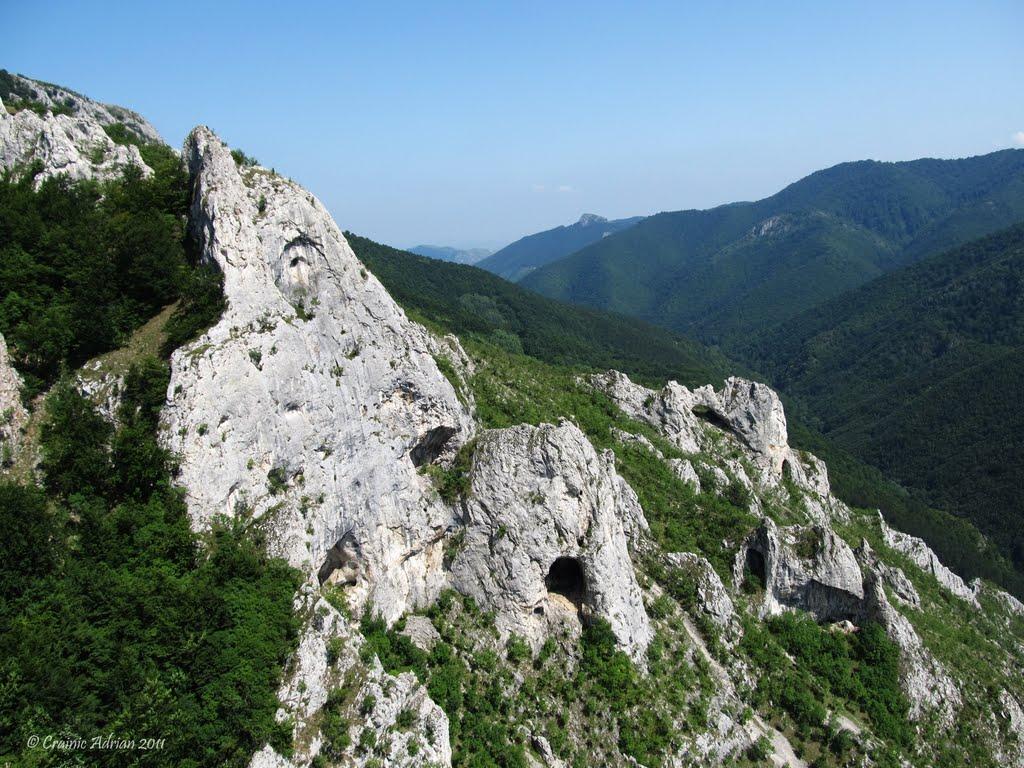
The commune of Intregalde is located in the central part of Alba County, at the foot of the Trascau Mountains, in the upper basin of the Galda and Galdița rivers, and partially in the tributary basin of the Râmeț, at an altitude ranging from 600 to 900 meters. It is dominated by Capra Peak at an altitude of 1,211 meters and Muntele Cetii at 1,234 meters.
Due to its geographical location, the commune is predominantly situated along the banks of the two rivers:
Documentarily, the locality is attested in 1525, under the name of Galda Românească, during the time when the voivode of Transylvania was Ioan Zapolya, who became King of Hungary in 1526.
The first documented village is Dealul Geoagiului along with the village of Cristești in 1413 under the name of Alter Gyor Valaharis, meaning the other Geoagiu Românesc. The village of Necrilești is documented in 1838, Ghioncani in 1877, and Ivaniș, Iliești, Mărinesti, Modolești, Popești, and Sfarcea in 1954, while Tecsesti is mentioned in 1909.
The locality of Intregalde is located:
In the villages of Tecsesti, Iliesti, Mărinesti, and Popești, the road is difficult to access, poorly maintained, rising steeply to an altitude of 900 m, with a path for foot and horse travel that passes through the forest, featuring many hairpin turns.
Opened on November 21, 2006, the Ethnographic Exhibition is housed in an old building that functioned as the village school until 1960. It shelters a multitude of traditional household items from the area.
The interior of the peasant house showcases:
It also includes tools and objects related to the occupations of both women and men, documents, coins and banknotes, books, and religious items.
All the popular creation, both material and spiritual, crafted with skill and artistry, inherited from ancestors, attests to the richness of life and the spiritual beauty of the inhabitants of the area, who still know how to preserve their unaltered traditions today.
 Festivals
Exile and homeland – in Ovid's footsteps through Romania (from Transylvania to the Black Sea) (Guided individual trip with minibus/HP) Contact person: Ladislau Ciocan / Dr. Heike Lammers-Harlander Travel companion: Ladislau Ciocan / Dr. Heike...
 History
Hunedoara County is a truly impressive and marvelous area. Being quite large in size, it encompasses several municipalities, including Deva – which, moreover, is considered the county's capital. The county is made up of Deva, Sântuhalm, and the...
 Adventure
In 1964, the commune of Teliciu Inferior was documented by the State Council. This settlement holds vital importance for the entire Hunedoara County, as well as for the village of Cinciș. We will see later why. The area around the village of Cinciș...