+40 749 680 770Monday - Sunday: 10:00 - 18:00

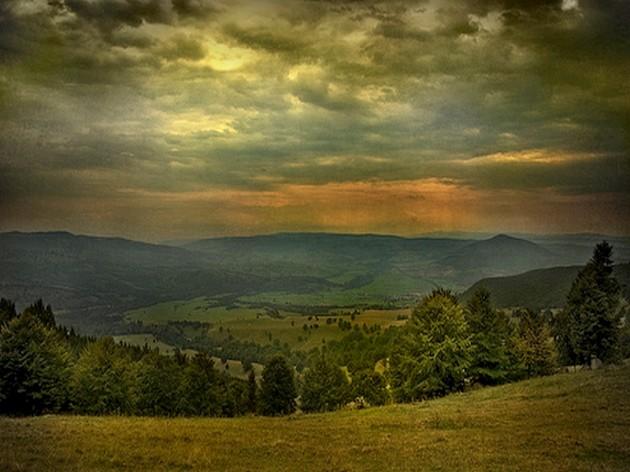
A landscape torn from stories, filled with traditions and monumental historical passages – this is how the Szeklerland could be summarized in a few words.
Geographically, the region spans both the southern and eastern parts of Transylvania. Both in the past and present, there are a series of discrepancies regarding its true borders. Thus, theoretically, Szeklerland lies within the area of the former Szekler seats, namely the current counties of:
On the other hand, unofficially and rather colloquially, the region includes only the counties of Covasna, Harghita, and relatively Mureș. It is no surprise that this stratification exists, as the inhabitants of these counties are the ones who most closely identify with the tradition and history of this region.
In the past, Szeklerland was culturally and industrially managed from Târgu Mureș. This municipality was also the economic hub, as the current county is best situated in relation to the rest of the country.
The Szeklerland region represents one of the best and most perfect geographical areas where a person can develop and live. Thus, the climate is of a moderately continental type, with mild summers, without extremes but slightly warmer in the summer months.
Today, the Szeklers live in Szeklerland, known also as a Hungarian ethnic minority with a strong historical sense. This unique consciousness of the inhabitants stems from the pages of history, as each of them knows the path their ancestors have traveled – to which we add the massacre at Siculeni. Many of their relatives were executed on the orders of the Austrian army in the devastating year of 1764.
However, the debates regarding the existence or non-existence of Szeklerland remain to be unraveled. Certainly, today, the popular belief and the tradition followed by the ancestors are no longer weighed in such a strong formula, which is why the delineation of the counties is more than sufficient.
It is important to mention the spring of 1990, when a silent march was held in Târgu Mureș, demanding the reconstruction of the renowned University of Cluj, Babeș-Bolyai. Additionally, there was a desire for the restoration of education in the Hungarian language within the university and the intentional and free use of properties confiscated by the Securitate during communism.
The beauty of Szeklerland is not only about history – rather, it lies in the eye of the beholder, the one who has the capacity to see beyond the pages of the past.
 Festivals
Exile and homeland – in Ovid's footsteps through Romania (from Transylvania to the Black Sea) (Guided individual trip with minibus/HP) Contact person: Ladislau Ciocan / Dr. Heike Lammers-Harlander Travel companion: Ladislau Ciocan / Dr. Heike...
 History
Hunedoara County is a truly impressive and marvelous area. Being quite large in size, it encompasses several municipalities, including Deva – which, moreover, is considered the county's capital. The county is made up of Deva, Sântuhalm, and the...
 Adventure
In 1964, the commune of Teliciu Inferior was documented by the State Council. This settlement holds vital importance for the entire Hunedoara County, as well as for the village of Cinciș. We will see later why. The area around the village of Cinciș...