+40 749 680 770Monday - Sunday: 10:00 - 18:00

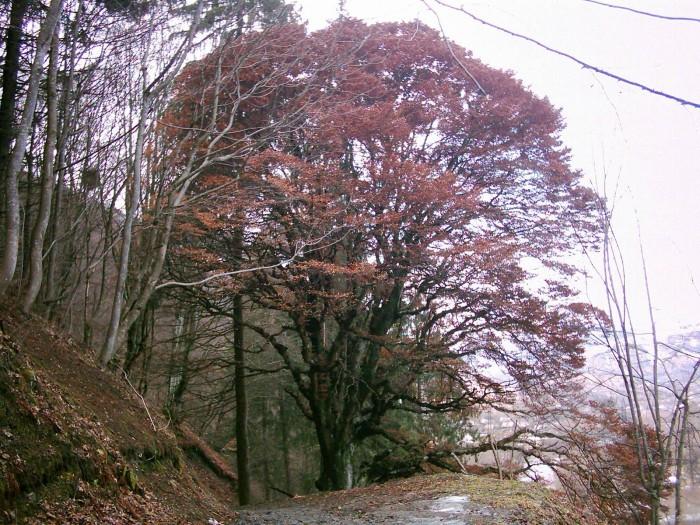
If you pass through the Arieș Valley on one of your hikes, you can't miss stopping at Muncelu. There, you will encounter one of the grandest trees you have ever seen. And along with it, you will discover the legends that lie beneath its crown, from which the leaves never fall.
We find ourselves on the left bank of the Arieș River, near Baia de Arieș, at Muncelu. Once, the narrow-gauge train whistled through here, but today only the narrow iron tracks remind us of the old steam train.
So we leave the car at the entrance to the village and set off on a hike to the Emperor's Beech. The path is a bit challenging, but the Arieș Valley accompanies us on our left. We enter the forest and take a trail that shows signs of still being used today.
Eventually, we reach the Enchanted Beech and stand in silence before its immense trunk. Instead of the Emperor's Beech, it could easily be called the Beech Emperor: its crown is of imperial beauty, and the size of the tree is immensely spectacular. The locals say that the tree is over 500 years old. In its shade, the villagers claim that Avram Iancu and the Emperor of Austria-Hungary once met, which is how it got its name.
We continue to gaze at the enormity of the tree before us and notice that its leaves are strange. The villagers tell us that they never fall. They change color with each season, but in winter, they do not fall; they dry up and remain until new ones grow.
Moreover, in the hollow of the tree, there is a true spring. Another legend says that in the past, people used to drink the water from this tree to heal various ailments. This is how it got its second name: the Enchanted Tree.
The Emperor's Beech, or the Enchanted Tree, as it is also called, hides beneath its crown a multitude of legends that the locals have passed down from word to word.
 Festivals
Exile and homeland – in Ovid's footsteps through Romania (from Transylvania to the Black Sea) (Guided individual trip with minibus/HP) Contact person: Ladislau Ciocan / Dr. Heike Lammers-Harlander Travel companion: Ladislau Ciocan / Dr. Heike...
 History
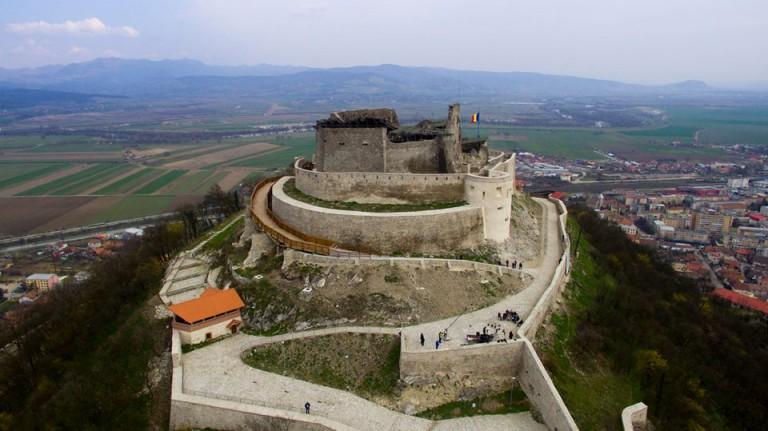
Hunedoara County is a truly impressive and marvelous area. Being quite large in size, it encompasses several municipalities, including Deva – which, moreover, is considered the county's capital. The county is made up of Deva, Sântuhalm, and the...
 Adventure
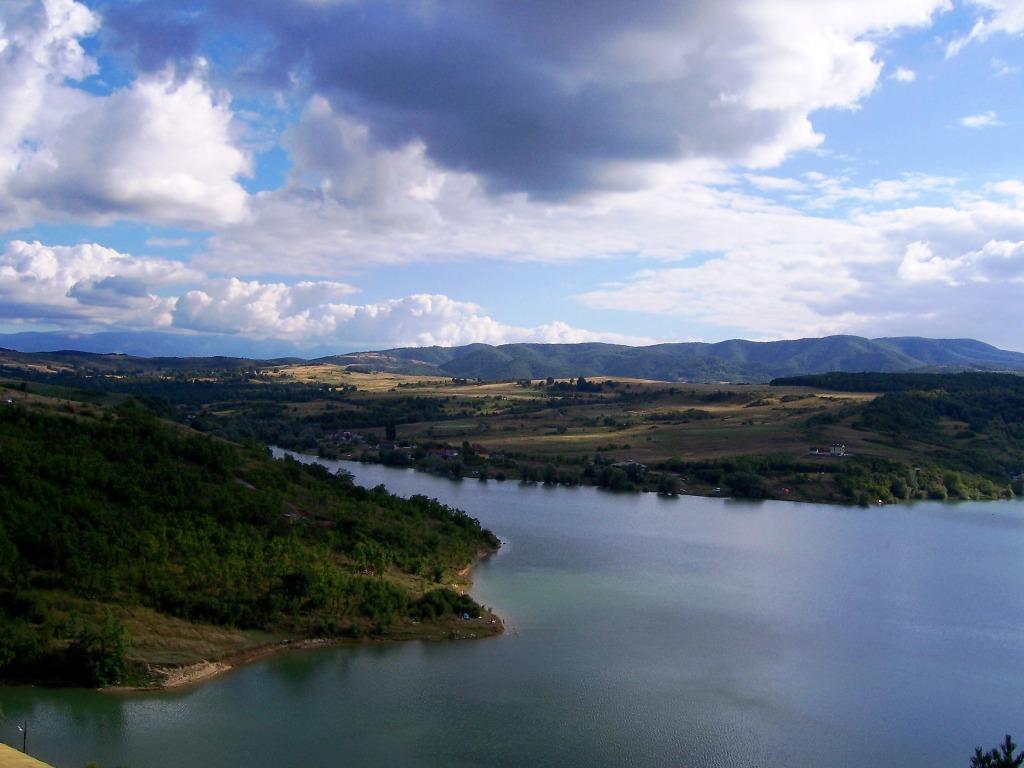
In 1964, the commune of Teliciu Inferior was documented by the State Council. This settlement holds vital importance for the entire Hunedoara County, as well as for the village of Cinciș. We will see later why. The area around the village of Cinciș...