+40 749 680 770Monday - Sunday: 10:00 - 18:00

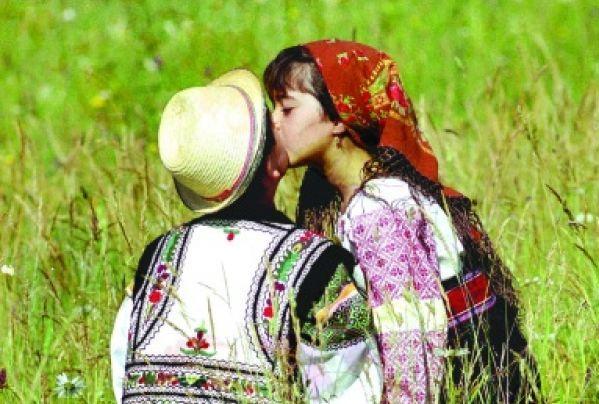
It's February, the month of love, but more importantly, it's the celebration of Dragobete, the day when girls are kissed. One of the most "loving" and ancient traditions celebrated in Romania, Dragobete takes place every year on February 24th. However, few know the significance of Dragobete and the legend that surrounds this holiday, which brings spring and joy.
Dragobete is a relatively recent holiday, with a history of nearly two centuries. The celebration of Dragobete coincides with the feast day of the Finding of the Head of Saint John the Baptist. Legend has it that Dragobete was the son of Baba Dochia, and he was a handsome, cheerful, and loving young man who charmed the women who crossed his path. He later became the protector of youth and the patron of love, and to this day, he remains a symbol of true love.
There are many legends and stories associated with this celebration. The equivalent of Valentine's Day, celebrated in most Western countries, Dragobete is a Romanian holiday with rich symbolism. It is said that on Dragobete, winter ends and spring begins. This day also marks the end of worldly pleasures, as the Holy Lent of Easter begins.
In the past, Dragobete marked the day when girls and boys would dress in festive clothes and go out to search for spring flowers. If the weather was bad, the young people would gather in a house "to celebrate Dragobete," meaning to have fun and form friendships. Another tradition says that sometimes girls would accuse each other of casting spells of ugliness against their rivals.
On Dragobete, even the village elders were not idle. They tended to their gardens because cleanliness was believed to bring abundance and freshness. The old folks paid special attention to the birds of the sky, as they believed that on this day, the birds choose their lifelong partners and unite to build their nests.
On the morning of Dragobete, girls would melt fresh snow, known as "fairy snow," and wash their faces with it to be as beautiful and attractive as the fairies. On Dragobete, crying is strictly forbidden: it is said that tears shed on this day bring troubles and sorrows.
Young couples must kiss on this day to ensure their love remains alive throughout the year. Dragobete is considered a protector and bringer of luck in love, with young people believing that Dragobete will help them find true love.
So don't forget: "Today is Dragobete, the girls are kissed."

 Tourist areas
The Transylvania Amphitheater: A Dream Refuge in the Heart of the Carpathians In the village of Moieciu de Sus, Brașov County, there is a magical place whe...
 Tourist areas
Sighisoara Citadel: A Treasure of History and Beauty in the Heart of Transylvania Sighisoara Citadel, located in Mures County, in the heart of historical T...
 Tourist areas
Haferland - The Land of Oats, a Dream Region in the Heart of Transylvania In the heart of Transylvania, between Brașov and Mureș, lies one of the most pict...