+40 749 680 770Monday - Sunday: 10:00 - 18:00

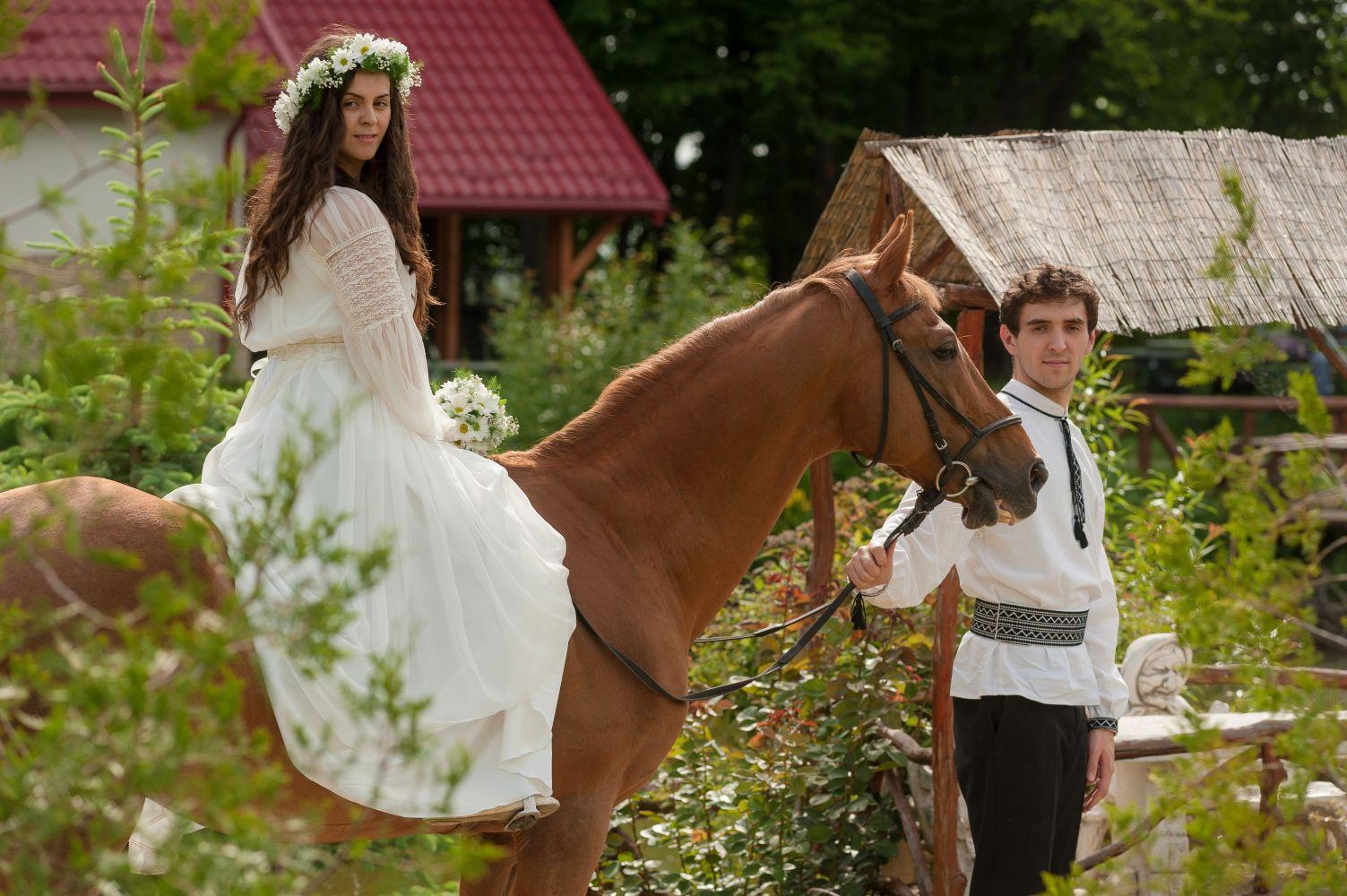
It's October, and as we all know, the wedding season is coming to an end. Lavish and extravagant weddings, brides in the most unique dresses, venues adorned with rare and expensive flowers, and other whims designed to enchant the guests—all of these are essential parts of the tradition of modern marriage. But how many of these still resemble the customs of the past?
A wedding is always a union of two. So the first step is undoubtedly the courtship. While in our times asking your beloved to be your wife has become simpler yet more expensive, especially if you want to impress her with a beautiful engagement ring, a few hundred years ago, courting a girl was something that had to be done with strictness.
Young men, after choosing the right girl, had to go accompanied by their parents to her home. In some areas of Transylvania, it was not uncommon for a witness - a lawyer known as the staroste - to be present alongside the parents and the potential groom. His role was to introduce the boy to the family and even negotiate the terms of the marriage in certain cases. While in our times the marriage between a man and a woman is well established even before the act itself, in the past it could happen that the girl or her family would refuse the marriage. There were not few cases when, in such situations, after the courtship, the boy's family would send someone to renegotiate the terms and to reconcile the bride and groom.
Today, it's simple: you visit a wedding invitation website, browse through a few hundred designs, choose a text, place your order, and within a day, you have the invitations ready to be distributed. But in the times when the Internet didn’t even have a definition, when telephones didn’t exist, and writing was reserved for the nobility, things were far from simple.
Tradition says that usually, on the Sunday after the engagement, the parents of the two young people, along with the matchmaker and the future bride and groom, would dress in their finest clothes and stroll through the village. Paper invitations didn’t exist, but there was no need for them:
The guests who were to attend the wedding had to take a sip from both containers. This way, the bride and groom knew in advance how many guests they needed to prepare the feast for.
Even the arrangement of the wedding hall has become simpler in our times. If you have a bigger budget, you can even afford to hire someone to take care of it. You choose the colors, flowers, table arrangements, and all the rest, and you don’t have to worry about a thing. But what were wedding arrangements like in 1748?
There can be no wedding without guests, just as there could be no wedding without decorating the wedding tree. On the Saturday before the wedding, tradition required the groom's friends, today’s groomsmen, to decorate a fir tree with garlands, colorful ribbons, and at the top, a… sweet bread. Sometimes the boys would try to bring down the sweet bread from the top of the tree, and the one who succeeded would receive a bottle of plum brandy.
In certain areas of Transylvania, the fir tree was sometimes replaced with plum branches, and the garlands and sweet bread with honey cakes. The tree was taken through the village to the groom, the godparents, and the bride, and after the wedding, it was given to the godfather. Today, we might view the decorated tree as the "bride's car," while the shouts of yesteryear from the godfather and the village lads have been replaced with car horns.
The bachelor party today has much more Western influences: limousines, private parties, relaxation at a spa, or other experiences that remind you that it’s your last day without responsibilities. But hundreds of years ago, everything was simpler and more natural.
For example, one of the groom's friends had the role of preparing a flag adorned with ribbons, ivy, and bells. On the same day, both at the groom's house and the bride's house, there were celebrations, games, and traditional activities. One of these involved the bride sewing the hat worn by her beloved on their wedding day, while the "bridesmaids" prepared a loaf of bread that the bride had to break over her head and share.
I know that in our times, for a bride to find the right dress can mean months of searching, hours spent in bridal salons, and thousands of searches on Google Images. But you should know that even in Transylvania a few hundred years ago, this aspect of the wedding was not overlooked.
On the morning of the wedding, the "hair salon" was set up at the bride's house by a friend of hers. Tradition states that her parents must be alive. The godmother also played an important role in preparing the bride: she had to secure the veil and the lemon blossom crown in her hair. Meanwhile, a band of musicians would play mournful melodies that reminded the girl's parents of the separation that was to take place through her union with the chosen one. The bride's brothers and sisters would set up a table in the yard, while their friends danced.
Yes, you read that right, weddings are traditionally held on Sundays and not on Saturdays as is common today. And "yes," again, the celebration was not held at a restaurant booked a year in advance, for which you pay small fortunes.
On the wedding Sunday, the custom was for the groom's family to prepare a large feast at their home, with the bride and groom seated at the head of the table. The godparents sat on either side of the table, and the feast began after the bride and groom ate sour cream or milk from the same plate, a custom meant to reveal the purity of their souls.
After the guests were served and the food was running low, the godfather had to start the gift-giving shout. The first to give a gift was he himself, followed by the parents of the bride and groom and the rest of the guests. However, the gift did not consist of an envelope with money, but rather items for the home, animals, grains, or other things that could help the newlyweds carve their path in life.
Today, the bride and groom prepare thoroughly for their first dance: they hire dance instructors, even choreographers, spend hours listening to the right song, and of course, hire the best photographers and videographers to capture the key moments of the wedding. But in popular traditions, wedding celebrations were entirely different. And the first dance of the couple didn't even exist, at least not in the sense we know today.
Instead, there was a dance of the hen. This usually took place towards the end of the wedding when the mother-in-law had to bring a hen, roasted and with a sheaf of wheat in its beak, which she had to sell to the godfather. It was said that if the godfather paid a large sum for the hen, the couple would have a long life and marriage. In some areas of Transylvania, instead of a hen, a piglet or a turkey was brought, depending on how wealthy the mother-in-law was.
It is said that customs and traditions serve to stop time in its tracks and nourish our souls... Today, without a doubt, having a 100% traditional wedding is no longer possible. But perhaps it wouldn't be a bad idea to keep at least small parts of tradition alive.
Maybe, in addition to simply buying the engagement ring, the future bride and groom will ask for the father's blessing before asking for their beloved's hand. Brides, alongside the expensive crystals adorning their pure white dresses, will not forget to pin a few lemon balm flowers. Among the wedding venue arrangements, perhaps a few sprigs of plum or fir will find their place. And on the candy bar, beneath muffins, jellybeans, and bananas, a few apples and pears from grandma's garden and homemade sweet bread will also find their spot. It’s not much, but perhaps it would be enough to remind us that a wedding between two people means much more than what it signifies today.
Main photo:
folkcostumes.wordpress.com
Photo 1:
phonotheque.hypotheses.org
Photo 2:
city-library-borsa.blogspot.de
Photo 3:
romaniainterbelica.memory.ro
 Festivals
Exile and homeland – in Ovid's footsteps through Romania (from Transylvania to the Black Sea) (Guided individual trip with minibus/HP) Contact person: Ladislau Ciocan / Dr. Heike Lammers-Harlander Travel companion: Ladislau Ciocan / Dr. Heike...
 Mediaș
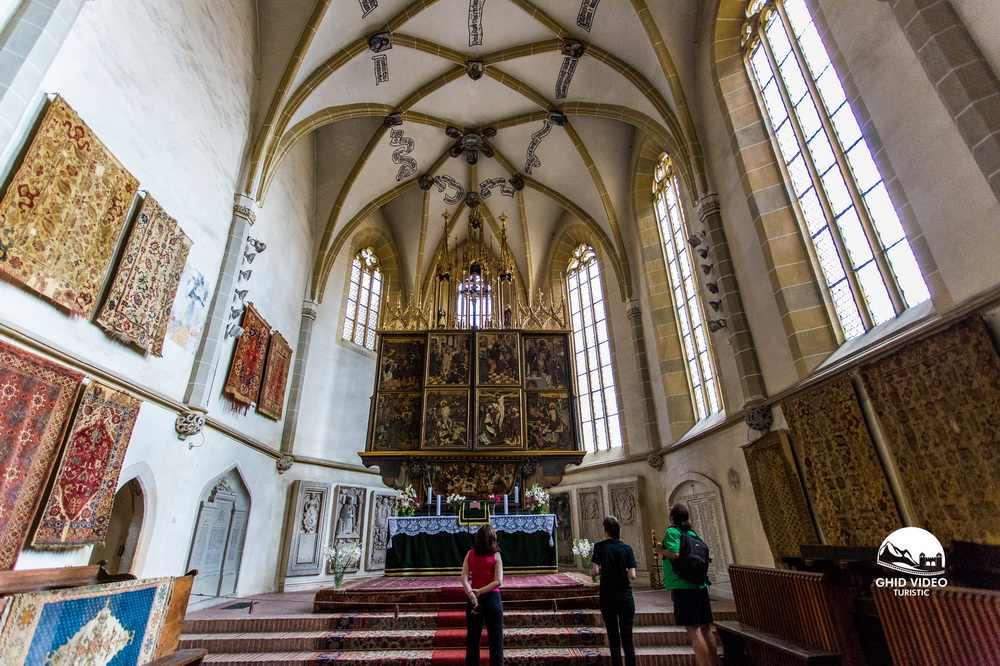
Located in Sibiu, Mediaş, the Church of Saint Margaret is an extremely well-known building at the national level. One of the reasons for its vast gratitude is precisely its leaning tower, so it can be extremely easily identified in the series of...
 Mediaș
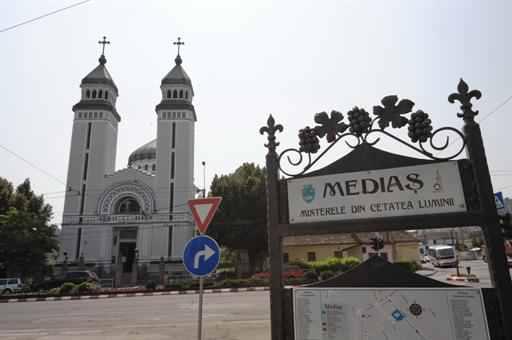
Located in Mediaş, the Orthodox cathedral is considered to be among the oldest in the entire Sibiu county. If so far the fortification has emerged from the area of interest, today things are completely different. Thus, the Orthodox cathedral is the...