+40 749 680 770Monday - Sunday: 10:00 - 18:00

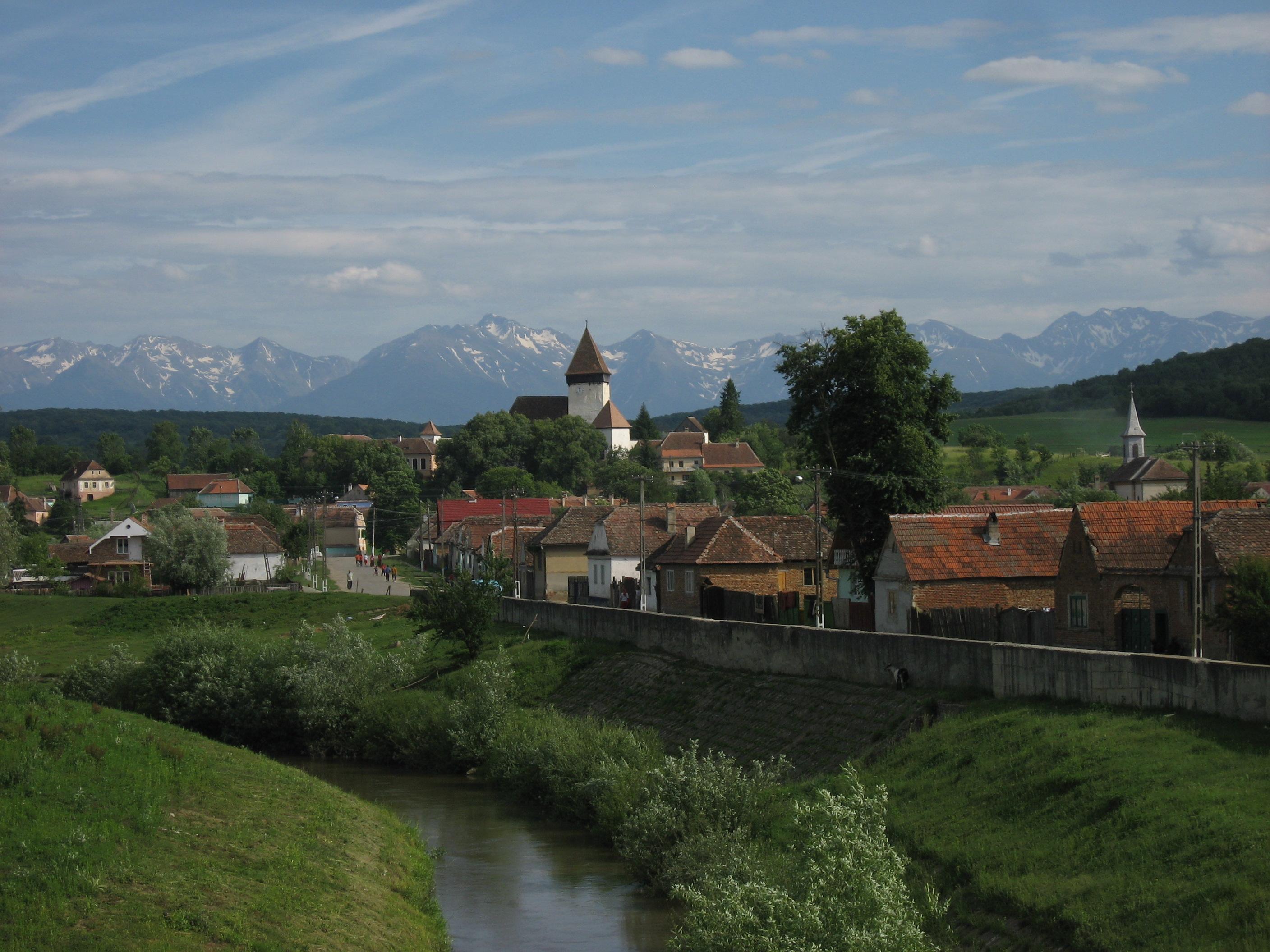
As you approach Hosman, you will see the tower of the fortified church standing guard in the distance against the peaks of the Făgăraș Mountains.
The double enclosure surrounded a Romanesque basilica at the beginning of the 16th century, whose very eloquent stylistic elements place the monument in the eighth decade of the 13th century, with the same plan layout found in the basilicas of the Sibiu area during that century.
Attacks from enemies necessitated its fortification two centuries later, when two rows of defensive walls, towers, and bastions were added.
Even so, the locality fell prey to the army of Vlad the Impaler, who, in 1456, set Hosman on fire. Evidence of this can be found in the stone cannonballs embedded in the walls of the enclosure.
- A double curtain with two towers on the outer wall
- Four towers on the inner wall
The gate tower connects the two enclosures and still retains the wooden drawbridge, above which the year 1502 can be read.
In 1903, when the 1-meter-high debris left from the collapse of the aisles was removed, the old hexagonal brick pavement of the aisles, often found in ancient Transylvanian Romanesque basilicas, was discovered.
The church stands out for its iconographic theme throughout the decor. From the moment we enter, the exterior of the portal catches our attention, adorned with fabulous animals and fantastic characters that correspond to the portal of *St. Stephen's Cathedral in Vienna*. This resemblance is not purely coincidental; it is said that apprentices from Vienna participated in the construction of the church.
The painted scenes inside the church invite us on a true journey into the realm of the fantastic, while also providing a lesson about life:
These elements draw our attention to the eternal struggle between good and evil, between matter and spirit, between the divine and the diabolical.
Source: [Sibiu Turism](http://www.sibiu-turism.ro/)
 Tourist areas
The Transylvania Amphitheater: A Dream Refuge in the Heart of the Carpathians In the village of Moieciu de Sus, Brașov County, there is a magical place whe...
 Tourist areas
Sighisoara Citadel: A Treasure of History and Beauty in the Heart of Transylvania Sighisoara Citadel, located in Mures County, in the heart of historical T...
 Tourist areas
Haferland - The Land of Oats, a Dream Region in the Heart of Transylvania In the heart of Transylvania, between Brașov and Mureș, lies one of the most pict...